
Home

About Emily

Properties

Home Valuation
Testimonials

Neighborhoods

Resources
Let's Connect

Georgia's real estate industry rewrote its disclosure paperwork this year, and the timing is awkward for anyone listing an older home in Smyrna. The state's standard Seller's Property Disclosure Statement, form F301, carries a June 1, 2026 revision date according to the Georgia Association of REALTORS® forms library, and the companion Seller's Disclosure of Latent Defects form expanded its flooding and water-intrusion section into something far more specific than what sellers filled out a year ago. That change lands on a city where crawlspace drainage, clay soil movement, and grading problems show up in inspection reports more often than in most parts of Cobb County.
If you're preparing to list a home in Forest Hills, King Springs, Smyrna Heights, or one of the renovated properties near Vinings Estates and the Battery corridor, the form isn't asking generic questions anymore. It's asking the same questions your buyer's inspector is about to answer anyway, and the gap between what you disclose and what they find is where deals slow down or fall apart during the due diligence period.
According to HomeLight, Georgia runs on caveat emptor, buyer beware, which puts the legal duty to investigate a property on the buyer before closing. What sellers owe buyers is honesty about material defects they actually know about that a reasonable inspection would not turn up on its own, the kind of thing hidden under a house rather than a cracked window anyone could see on a walkthrough.
The forms exist to document that duty, not replace it. A breakdown of the 2026 revisions to Georgia's Latent Defects disclosure form notes that the entire flooding and water-intrusion section was rewritten this cycle, expanding the ways sellers are asked about historical water issues rather than just the obvious scenario of a flooded basement after a storm. That rewrite reads like it was drafted with crawlspace homes in mind, which happens to describe a large share of Smyrna's older housing stock.
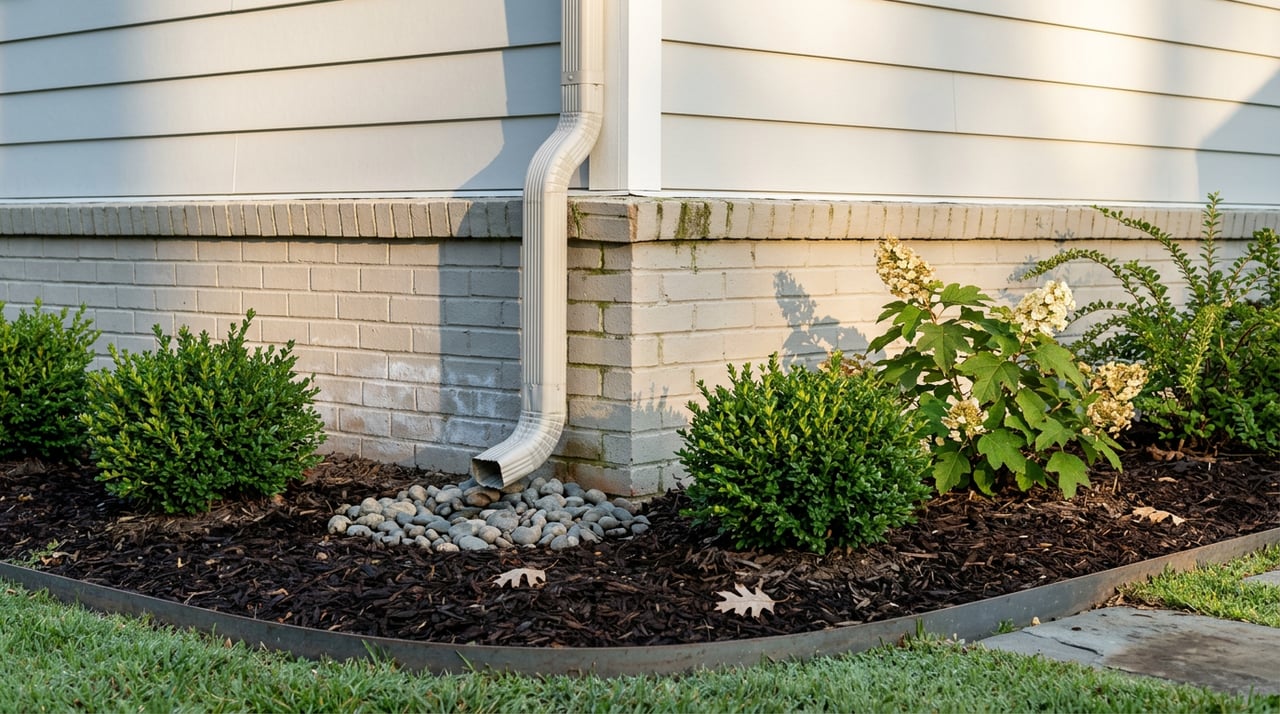
Home inspectors working across Cobb County have described a consistent pattern in Smyrna, according to a local inspection guide focused on the city's neighborhoods. Homes built decades ago in areas like Forest Hills and King Springs show settlement that's often normal for a house of that age, but the moisture pathways underneath are not always benign. Georgia's clay soil expands when wet and contracts when dry, and that cycle, combined with mature trees and aging drainage systems, produces the same handful of findings again and again. One inspection turned up standing water under a crawlspace after a routine rain, not from a plumbing leak but from grading that directed water toward the foundation instead of away from it. The repair itself was modest. Left alone, it would not have stayed that way.
The findings that keep surfacing in Smyrna inspections include:
None of this is confined to one pocket of the city. It shows up in older ranch homes near Williams Park just as it shows up in updated properties closer to Vinings Estates, where a finished lower level can mask a drainage problem instead of resolving it. A buyer's inspector doesn't care how recent the paint or the flooring looks. They care what's happening underneath it.
A disclosure gap used to be mostly a paperwork problem. In a market where homes moved in a couple of weeks, a buyer with a backup offer waiting was less likely to walk away over a grading issue. That leverage has shifted.
| About a year ago | Most recent 30-day window | |
|---|---|---|
| Median days on market | Roughly 12 days | Roughly 32 days |
| Share of active listings with a price cut | About 25 percent | Nearly 43 percent |
Those figures come from the most recent 30-day snapshot of Smyrna sales activity, tracked this summer, and they tell a specific story: buyers have more time to be careful, and a growing share of sellers are already competing on price before an inspection even happens. A separate estimate for Smyrna as of June 2026 put the typical time to a pending sale at around 45 days, a similar signal from a different measure. When a buyer's inspector finds a crawlspace issue the seller didn't flag, in a market like this they don't need to overlook it to keep the deal alive. They have room to ask for a credit, request a repair, or walk and wait for the next listing if the seller says no.
That's the part sellers tend to miss. The disclosure form isn't the risk. The risk is a buyer's inspector finding something the seller should have known about, in a market with enough inventory that the buyer doesn't have to compromise to get it fixed.
The sellers who avoid this renegotiation are the ones who look under the house before a buyer's inspector does. A pre-listing inspection that specifically checks the crawlspace vapor barrier, site grading, and drainage costs far less than the price reduction that follows a surprise finding during due diligence. It also gives a seller accurate language for the disclosure form instead of a guess, which matters because Georgia's standard only asks for honesty about what you actually know, not speculation about what might be true.
If a pre-listing inspection turns up something that needs a permitted repair, such as regrading near a foundation, the City of Smyrna's Community Development Department typically reviews residential building permit applications within 5 to 10 business days. For most sellers, that leaves enough runway to handle a fix before a target list date, provided the inspection happens early rather than after the first showing.
Pairing that inspection with staging matters too. A buyer walking through a well-presented, well-maintained home is more inclined to trust the disclosure they're reading and less inclined to treat every small finding as evidence the seller was hiding something bigger. Presentation and paperwork aren't separate conversations in this market. They're the same conversation, just told in two different documents.
What should I know about disclosures before I sell? What the law requires is honesty about material defects you actually know about. A pre-listing inspection is the most reliable way to know what you know before you sign anything.
Does every seller have to use form F301? No. According to SmartSTIPS, F301 is a voluntary, expanded disclosure. Some sellers use the shorter Latent Defects form instead, particularly if they have limited history with a property, such as an inherited home. Either way, the underlying duty to disclose known latent defects applies no matter which form gets used.
What if I genuinely didn't know about a crawlspace issue? Georgia's disclosure standard is based on actual knowledge, not perfection. If you didn't know and had no reasonable way to know, you're not expected to have guessed. The real exposure isn't an honest gap. It's a known issue left off the form because a seller hoped it wouldn't come up.
If you're getting ready to list in Smyrna this fall and want a clear-eyed read on what your home's disclosure conversation might actually look like, Homes by Emily Kelly can walk through a pre-listing inspection plan, a staging strategy, and a pricing approach built around what buyers in this market are actually asking about. Let's Connect before your listing goes live, not after a buyer's inspector finds something first.
This article is general information, not legal, tax or financial advice. Consult a qualified professional about your situation.
Browse active listings in the area or contact us for off-market listings.
Have an expert help you find out what your home is really worth.
Get assistance in determining current property value, crafting a competitive offer, writing and negotiating a contract, and much more. Contact me today.